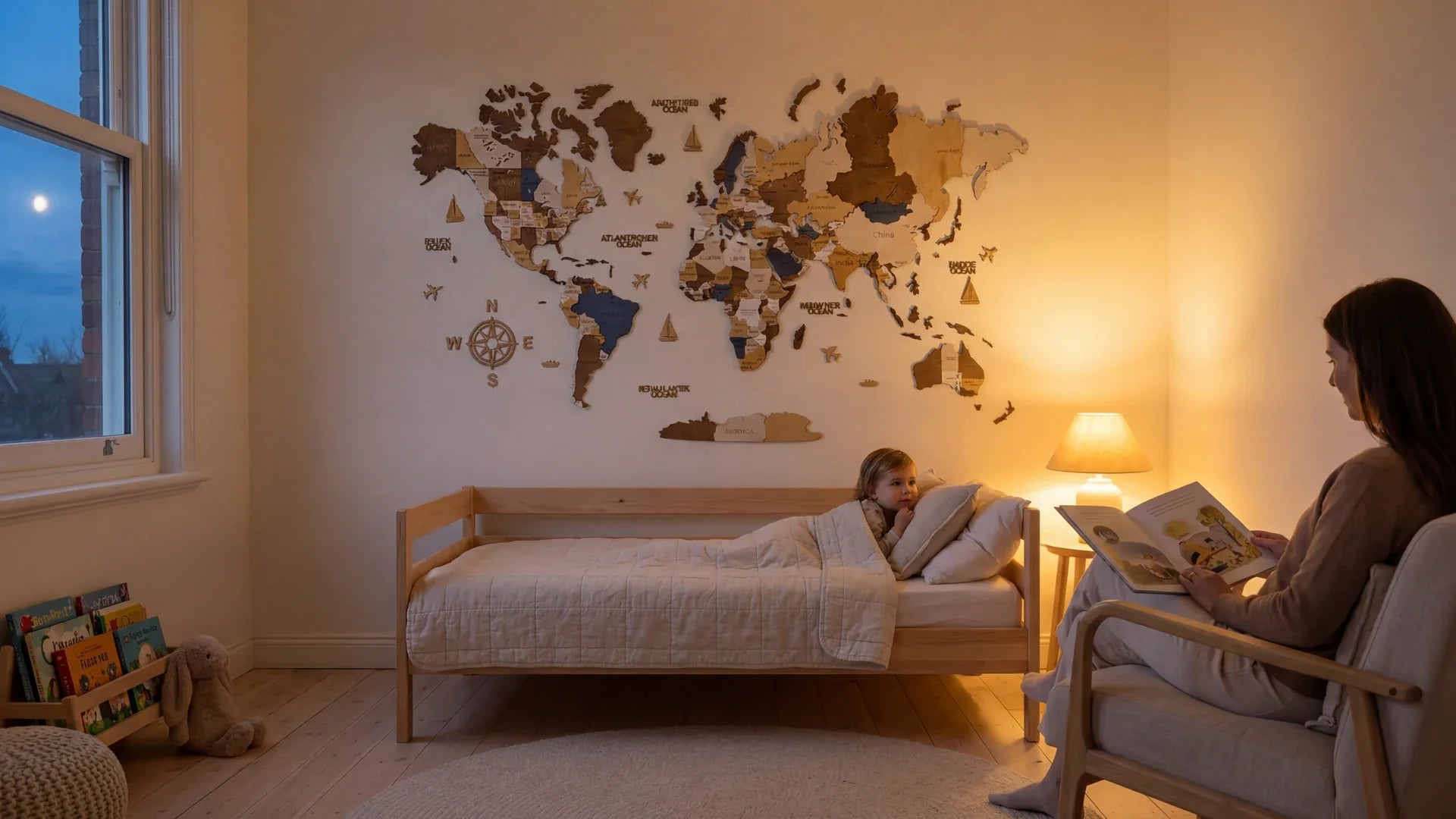
Interior magazines tell parents to keep the wall above a child's bed almost bare. Child-development specialists often push back, and for daytime curiosity they are right that a child's wall can hold more than designers allow. For settling at night, though, the magazines are closer to the mark. Less above the bed helps a child come down.
Above-the-bed decor in a kids' room is a sleep question first. The wall a child faces from the pillow is the last thing they look at before sleep, so it should calm rather than excite. Five calm choices do most of that work. WOW WOOD makes wooden world maps from birch plywood, and only one of the five is a map.
1. One calm anchor, not a gallery
The strongest thing you can do above a child's bed is also the simplest. Hang one piece, low and centred, and stop there. A cluster of frames gives a tired child a dozen things to track at the moment they are trying to let go of the day. A single calm object gives the eye one place to rest.
This is where the wall and sleep meet. Mary Helen Immordino-Yang, a neuroscientist at the University of Southern California, argues in Emotions, Learning, and the Brain (W. W. Norton, 2016) that a sense of safety is what frees a child's attention. A child who feels settled can look softly at one thing. A child scanning a busy wall stays a little switched on.
In a real room this is easier than it sounds. Take down all but one piece above the bed, and give that piece bare wall around it to breathe. If you already own several things you love, move them to a different wall and let the headboard wall stay quiet. The wall a child faces at night does not have to carry everything the room wants to say.
2. A soft, warm light source above the bed
Light tells a child's body what time it is. The bright, cool light that suits homework makes settling harder, while a low, warm glow says the day is closing. A small dimmable wall light, or a bedside lamp with a warm bulb somewhere around candle-to-sunset colour, does more for sleep than any picture.
Put it within the child's reach if you can. A light a child can dim themselves becomes part of how they end the day, a small act of agency at bedtime. Keep the brightness low and the colour warm, and let the wall above the bed sit in soft shadow rather than full light.
Try not to leave a ceiling light as the last one on at bedtime. Overhead light is flat and bright, and it fills the whole room at the moment you want the edges to soften. A single warm pool of light near the bed draws the day to a close better than a bright room ever will.

3. Something to look at in the day, quiet at night
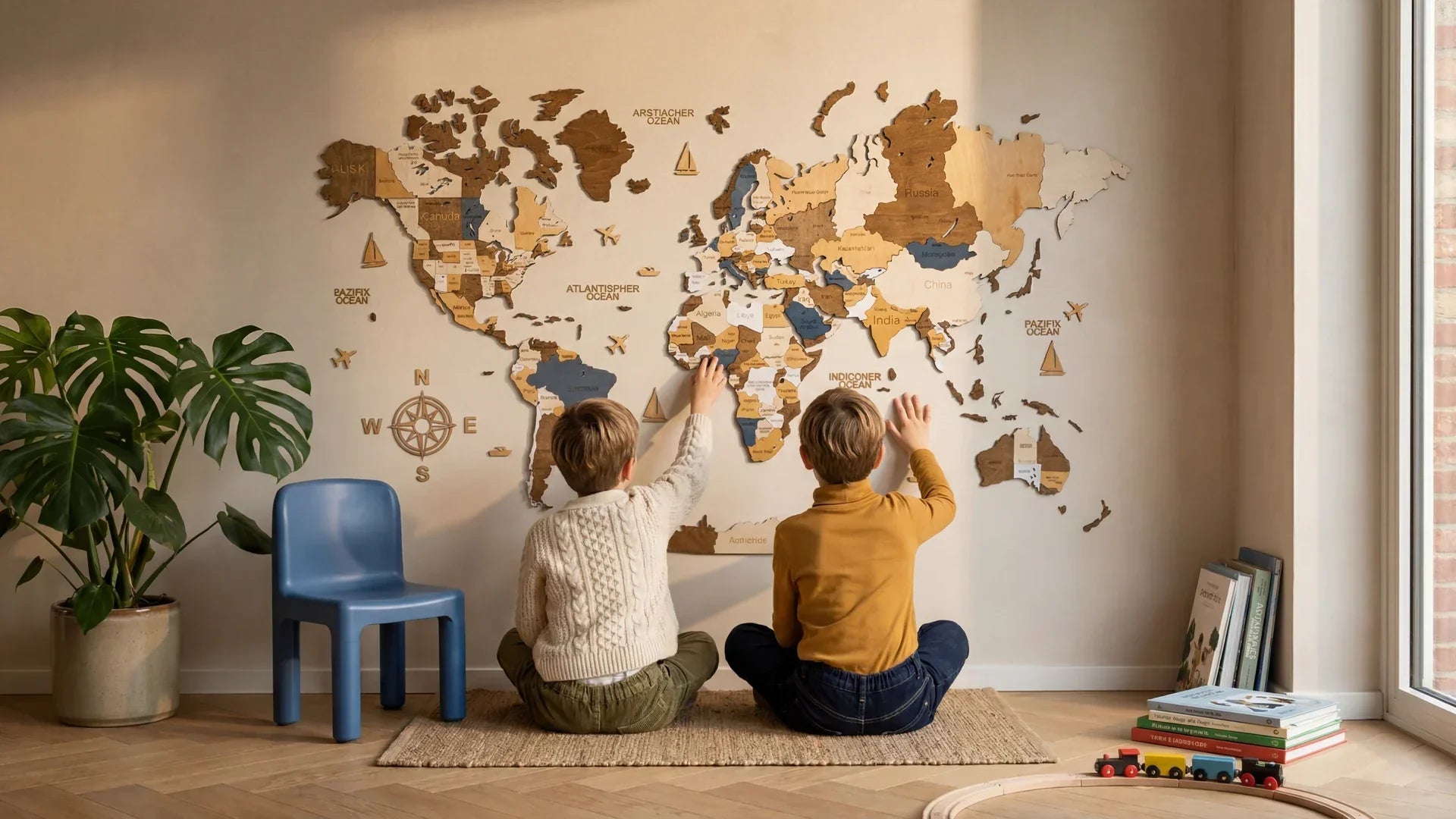
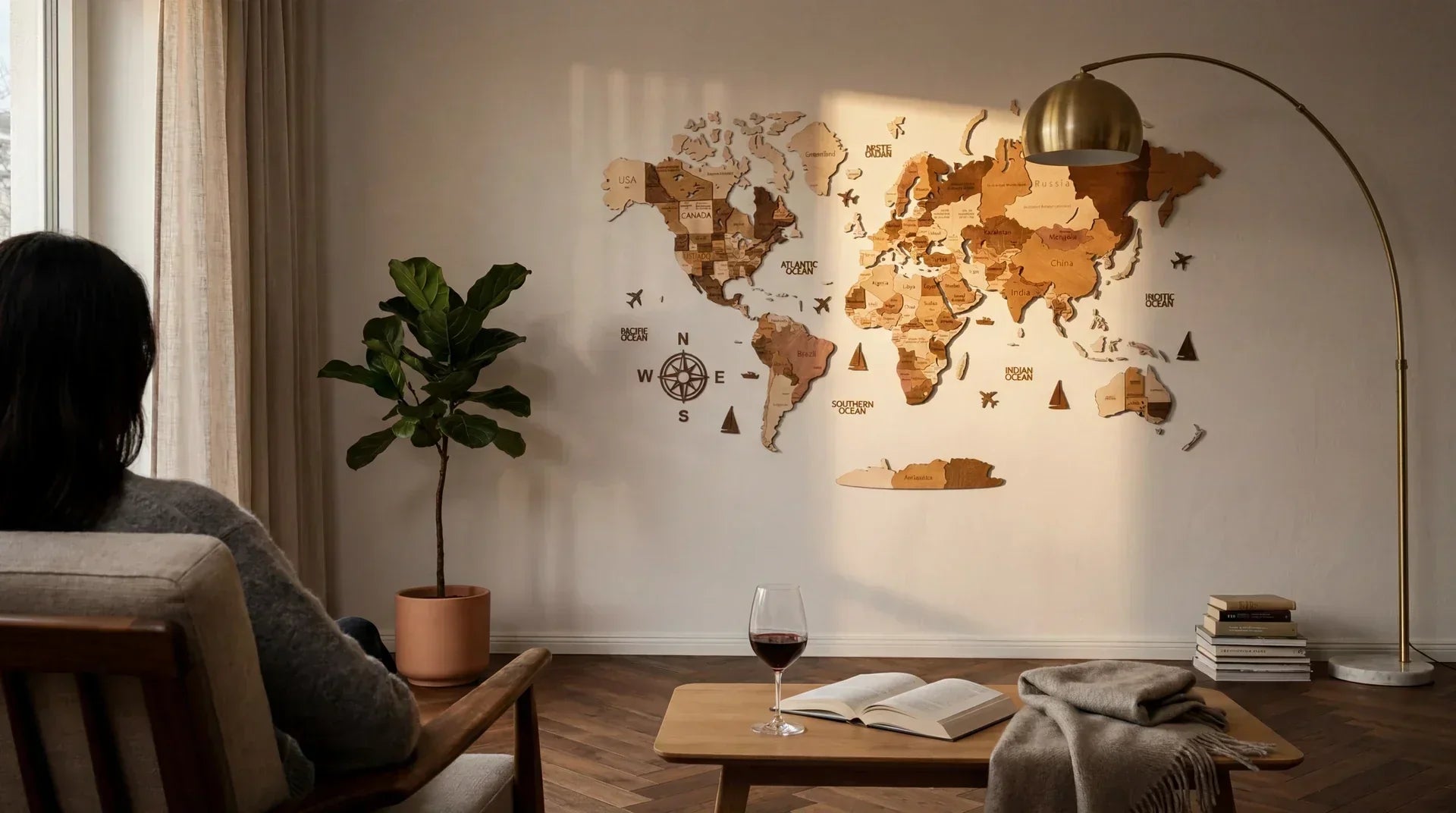
One object earns its place by working in two registers. By day a wooden world map invites a child to find places, trace coastlines, and ask where the grandparents live. By night, lit only by the warm lamp, it goes still. That is the test for anything above a child's bed: lively when they are awake, quiet when they are not.
A WOW WOOD map in the Multicolor finish suits a child's room because the colours read as warm rather than loud. The surface is matte birch plywood, so it does not glow or reflect, and the M size (120 × 65 cm) sits comfortably above a small bed. Hang it low, at the child's eye level, not the parent's. Pinning is optional, and many families leave the map bare at this age, or mark only the few places that already mean something to the child.

4. A textile that softens sound and sharpness
Hard rooms feel less safe than soft ones, and children hear the difference before they can name it. A cotton wall hanging or a quilt above the bed absorbs a little sound and takes the edge off bare plaster. The room becomes quieter and warmer to the touch, which is most of what settling means. Texture matters more than pattern here.
Choose something washable, in a colour close to the wall rather than a bright contrast. Mount it so it cannot come loose over a sleeping child, fixed at the top rather than draped on a hook. You do not need a large piece, either. Even a small panel of felt, or a folded quilt over a low rail, changes how a corner sounds. A plain woven throw near the pillow does quiet work every single night.

5. A personal object at the child's eye level, not the parent's
Height is the whole trick, and it is the thing parents get wrong most. We hang the drawing, the photo, the small shelf at the height our own eyes meet, then wonder why the child ignores it. The Reggio Emilia approach calls the environment the third teacher. A room arranged for the adult eye quietly teaches the child that the wall is not theirs.
Hang one personal object low, where the child sees it from the pillow and reaches it standing up. A first drawing, a photograph of someone they love, their name in wooden letters. When the wall meets them at their height, the room reads as their own, and a room that belongs to a child is a room they settle in.

Above-the-bed decor that helps kids settle: the short version
If you do only one thing, do the first one. One calm anchor, hung low, beats every clever idea on this list. Add a warm, dimmable light next, then a soft textile, then the personal object at the child's height. The world map is the piece that bridges day and night, lively at play and quiet at sleep.
Choosing without overthinking it
You do not need all five at once. Start with the wall above the bed bare, add one anchor, and live with it for a week before adding anything else. If that anchor is a map, the warm Multicolor finish is the gentlest for a young room, and you can compare sizes across our wooden world map collection. For the rest of the walls, our complete guide to a kids' room with a world map picks up where this one stops.
A few questions, briefly
What should I hang above my child's bed?
Does wall decor affect a child's sleep?
Is it safe to hang a world map above a child's bed?
What height should decor be above a kid's bed?
What age is a world map good for?
None of this has to be finished tonight. A child settles into a room slowly, the way a room settles into a house. Get the wall above the bed calm, keep it warm and low and theirs, and the rest can wait. The point was never the decor. It was the child, coming down at the end of the day.
Related reading
- The complete guide to a kids' room with a world map
- Decorating a kids' room: colourful and functional wall ideas
Written by the WOW WOOD editorial team. We've helped European households style their walls since 2022.

Share: